

Performance Golf Fabrics Explained: Breathability, Wicking, And Stretch

Walk past any golf apparel wall and the tags all start to blur together. Breathable. Moisture wicking. Four way stretch. Quick dry. Every shirt promises the same three or four things, most of them cost somewhere between $60 and $90, and nothing on the label explains what any of it actually does for your game. So most golfers end up buying on color and logo and hoping the rest works out.
The good news is that the science behind those buzzwords is simple, and once you understand it, two things become obvious. First, the right fabric genuinely matters over four hours in the sun, the wind or the rain. Second, the technology behind it has become so common that you no longer need to pay premium prices to get it. This guide breaks down what each term really means, how to pick a shirt for hot, cold and wet rounds, and why some of the best value shirts in golf now cost less than a sleeve of premium balls.
What Breathability Actually Means
Breathability is about airflow. A breathable shirt lets air move through the fabric and lets the heat and water vapor your body produces escape instead of building up against your skin. Two things drive it: the structure of the knit and the weight of the fabric. An open, textured knit like pique, the classic golf shirt weave with that tiny waffle texture, leaves more room for air to circulate than a dense, flat weave does.
Fabric weight matters just as much. Weight is measured in grams per square meter, and lighter cloth simply has less material trapping heat. Here is the twist most golfers miss: cotton is actually quite breathable. Air passes through it just fine. The problem is what happens once you start sweating, which is where the second buzzword takes over.
Moisture Wicking, Demystified
Moisture wicking describes how a fabric handles sweat. Cotton fibers absorb water and hold it, which is why a cotton shirt gets heavy, clings to your back and stays damp for the rest of the round. Polyester fibers do the opposite. They repel water at the surface, so sweat gets pulled through the tiny channels between the yarns, spreads across the outer face of the shirt and evaporates quickly. That movement is called capillary action, and it is the entire trick behind every performance shirt ever made.
The big brands each stamp their own trademarked name on this same idea, and nearly every golf polo buying guide confirms the underlying recipe barely changes from label to label: mostly polyester, built to move sweat outward, comfortable through a wear time of four hours or more. When a $6 shirt and a $90 shirt are both 100 percent polyester pique with a wicking finish, they are running the same physics.
Stretch And Freedom Of Movement
Stretch comes from two places. Some of it is mechanical, meaning the knit itself has enough give to move with you, which is why even a shirt with no elastic fibers can feel flexible. The rest comes from elastane, also sold under the names spandex and Lycra, a stretchy fiber blended into the fabric in small amounts. Most performance polos on the market today run between 4 and 14 percent elastane, with polyester making up the rest.
For golf, the useful part is not how far the shirt stretches. It is how well it recovers. A golf swing asks your shoulders to rotate roughly 90 degrees while your lower body resists, and a shirt that stretches through the backswing but snaps back to shape keeps its fit round after round. One that stretches and stays stretched ends up baggy at the shoulders and sloppy at the elbows by August. Recovery is also why a small amount of elastane goes a long way, since too much of it starts to work against the wicking and airflow you bought the shirt for in the first place.

MG Senior Golf Balls
Built for golfers looking for a higher launch, hotter feel and more distance, particularly when driver distance is under 250 yards.
- Designed for extra distance
- 350-dimple, 2-piece construction
- Durable Surlyn cover
- Available in white or optic yellow

DynaGrip Elite
A lightweight premium Cabretta leather glove made for golfers who value soft feel, grip feedback and comfort.
- Soft premium Cabretta leather
- Thin construction for better feel
- Elastic knuckle hinge for comfort
- Men's, cadet and women's sizing

MG600S Laser Rangefinder
A compact 6X rangefinder with slope-adjusted yardages, pin-lock confirmation and an external LCD display.
- Measures from 6 to 600+ yards
- MG-Lock pin targeting technology
- Slope-adjusted distance mode
- 6X magnification and external LCD
Picking A Shirt For Hot Rounds
Hot weather is where fabric choices get loud. For summer golf you want lightweight polyester, an open pique or mesh texture, lighter colors that reflect sun instead of absorbing it, and a UPF rating if you burn easily. Editors who test summer shirts consistently point golfers toward fabrics under 180 grams per square meter, since anything heavier starts trapping warmth on a 90 degree afternoon. Our guide to what to wear golfing covers full outfits for every season, but the shirt is the piece that makes or breaks a July round.
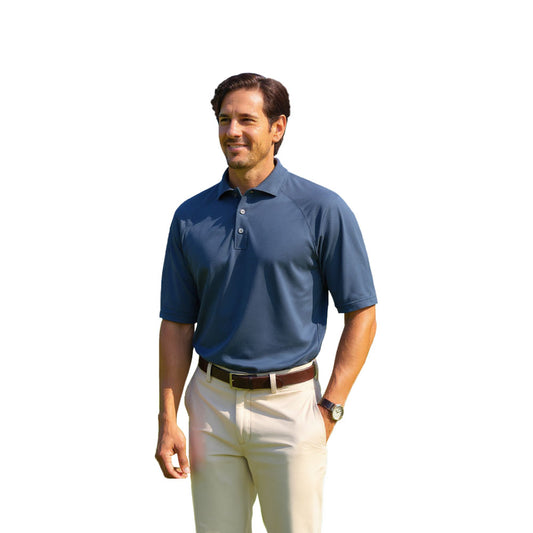
This is exactly the job the MG Performance Polo Shirt was built for. It is 100 percent polyester pique at 145 grams per square meter, right at the light end of that ideal summer range, with moisture wicking, an antimicrobial finish to fight odor, UPF 15 to 39 sun protection and a tagless neck. It comes in five colors from small through 5XL, and at $6.99 it has racked up more than 100 reviews with 88 percent of them at five stars. The theme that keeps repeating in those reviews is heat: golfers in Florida and Texas saying it wicks sweat and stays cooler than shirts that cost ten times as much.
Dressing For Cold And Wet Rounds
Cold and wet golf is a layering problem, and the wicking base is even more important than it is in summer. A damp cotton layer against your skin in 45 degree wind will chill you to the bone, while a polyester shirt that moves sweat outward keeps that thin layer of air next to your body dry and warm. Build from there: a wicking polo or base layer against the skin, an insulating middle layer like a quarter zip or fleece, and a windproof or waterproof shell on the outside that you can shed as the day warms up.
The outer shell is another spot where prices have collapsed. MG carries waterproof wind shirts and zippered windbreakers starting at $5.99, which means a complete three layer system can cost less than one premium mid layer. For the full breakdown of temperatures, fabrics and layer counts, our guide to dressing for cold weather golf goes club length by club length through what actually keeps you swinging freely below 50 degrees.
Comfort Does Not Have To Be Expensive
Here is the part the apparel wall does not advertise. Polos from the big fashion forward brands routinely carry price tags from $85 up to $130, yet the fabric inside them is the same commodity technology described above: polyester, a wicking finish, a touch of stretch, maybe a UPF rating. The premium buys you a logo and a print, not better physics. Reviewers have caught on, which is why the major magazines now publish entire roundups of budget shirts that save cash and perform just as well on the course.
MG Golf takes that logic to its endpoint by buying overstock from name brand apparel makers and passing the savings along, which is how you get shirts from major brands for under $10. The Core365 Performance Pique Polo Shirt is the headliner: a recognized national apparel brand, 100 percent polyester pique at a featherweight 140 grams per square meter, with moisture wicking, UV protection, an antimicrobial finish and wrinkle resistance, in both men's and ladies' cuts, for $5.49. One reviewer summed it up as much better than paying $79 for the same white shirt at the pro shop. Officially licensed PGA Tour hats sit right beside it at $5.99, and every single wearable in the full MG Golf apparel collection, shirts, wind layers, hats and socks included, currently costs less than $7.

Care Tips To Keep Performance Fabrics Working
Performance fabric is low maintenance, but it has one mortal enemy: fabric softener. Softener works by coating fibers in a waxy film, and that film clogs the exact channels that wicking depends on. Skip it entirely. Wash performance shirts in cold water, avoid bleach, and either tumble dry on low or hang them, since high heat can break down elastane and cause the fabric to lose its snap.
Treated well, a polyester shirt is remarkably durable. It resists shrinking, holds its color, and its wrinkle resistance means it can come straight out of a suitcase and onto the first tee. That durability is part of the value math: a $6 shirt that survives three seasons of weekly rounds costs pennies per wear.
Dress For The Round, Not The Price Tag
The buzzwords are real, but they are not rare. Breathability comes from open knits and light fabric. Wicking comes from polyester and capillary action. Stretch comes from the knit and a pinch of elastane. Every one of those features now exists at closeout prices, which changes the smart play for building a golf wardrobe.
Instead of one expensive polo you baby, run a rotation. Three wicking shirts, a wind layer and a licensed hat from the MG apparel rack costs less than $30 combined, covers hot, cold and wet rounds, and lets you throw everything in the wash without a second thought. Your focus belongs on the shot in front of you, not on the shirt sticking to your back, and it turns out that comfort has never been cheaper to buy.


